
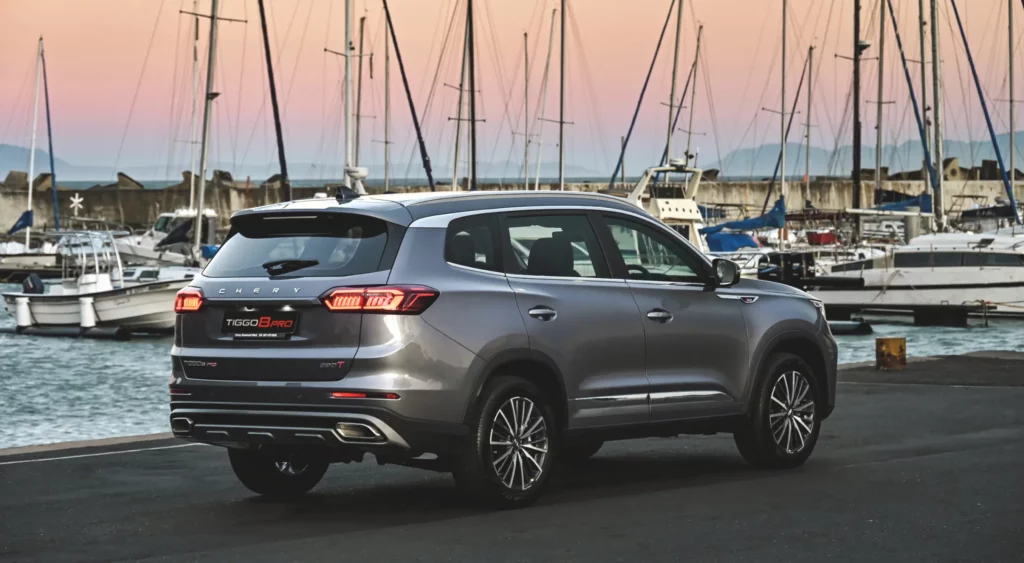
Introduction: Chery vs Haval – Which One is the Better Buy?
Chinese automakers have taken the South African market by storm, offering feature-packed, affordable SUVs that compete with traditional brands like Toyota, VW, and Ford. Two of the biggest names in this segment are Chery and Haval, both offering modern design, advanced technology, and value for money.
If you are considering a Chery Tiggo 4 Pro, Tiggo 7 Pro, or Tiggo 8 Pro, you might also be looking at Haval Jolion or H6 models. But which brand offers the better deal, performance, and ownership experience? In this side-by-side comparison, we break down the key differences between Chery and Haval SUVs, covering pricing, performance, technology, fuel efficiency, and safety features.
Price and Value for Money: Chery Offers More for Less
Price is often the biggest factor when choosing a car. Both Chery and Haval offer competitive pricing, but the 2026 Chery lineup provides a wider range of entry points, particularly with the LiT series.
Chery vs Haval Pricing Comparison (February 2026)
| Model | Starting Price (ZAR) | Leather Seats | Sunroof | ADAS Safety |
|---|---|---|---|---|
| Chery Tiggo 4 Pro LiT | R269,900 | No | No | No |
| Haval Jolion City | R345,000 | No | No | No |
| Chery Tiggo 7 Pro | R389,900 | Yes | Yes | Yes |
| Haval H6 Luxury | R495,500 | Yes | Yes | Yes |
| Chery Tiggo 8 Pro | R469,900 | Yes | Yes | Yes |
Why Chery Wins in Pricing and Features:
- The LiT Advantage: Chery offers the Tiggo 4 Pro LiT starting under R270,000, which is significantly more affordable than the base Haval Jolion.
- Standard Luxury: More premium features like 360-degree cameras and dual-zone climate control are bundled into Chery mid-range models without requiring expensive upgrade packs.
- Value for Money: Especially in the Tiggo 4 Pro and Tiggo 7 Pro ranges, you get a higher “spec-per-Rand” ratio.
Performance and Engine Efficiency: Kilowatts and Torque
While both brands use turbocharged engines, Chery technology in 2026 focuses on high output from smaller displacements, while Haval often relies on larger 2.0L units for their top-tier models.
Engine Comparison: Chery vs Haval
| Model | Engine | Power (kW) | Torque (Nm) | 0-100km/h |
|---|---|---|---|---|
| Tiggo 4 Pro LiT | 1.5L NA | 83 kW | 138 Nm | 11.5 sec |
| Tiggo 4 Pro Turbo | 1.5L Turbo | 108 kW | 210 Nm | 10.2 sec |
| Haval Jolion Pro | 1.5L Turbo | 105 kW | 210 Nm | 10.5 sec |
| Tiggo 8 Pro Max | 2.0L Turbo | 187 kW | 390 Nm | 7.3 sec |
| Haval H6 GT | 2.0L Turbo | 155 kW | 325 Nm | 8.0 sec |
Why Chery Wins in Performance:
- Higher Output: The Tiggo 8 Pro Max 2.0T significantly outmuscles the Haval H6 GT in both power (187 kW) and torque (390 Nm).
- Transmission: Chery’s newer 7-speed Dual-Clutch Transmission (DCT) provides snappier shifts compared to Haval’s more relaxed tuning.
- Hybrid Options: The Chery Super Hybrid range offers combined power outputs of up to 455 kW on flagship models like the Tiggo 9, a figure Haval currently cannot match in the SUV segment.
Fuel Efficiency: Chery Turbo Tech Saves You More
With fuel prices being a major factor for South Africans, efficiency is key. Chery’s newer engines are tuned for better economy in city driving.
Fuel Consumption: Chery vs Haval (Litres per 100km)
| Model | Fuel Economy | Estimated Monthly Cost (1,500km) |
|---|---|---|
| Tiggo 4 Pro | 6.7L/100km | ± R2,510 |
| Haval Jolion | 7.5L/100km | ± R2,810 |
| Tiggo 7 Pro | 6.9L/100km | ± R2,580 |
| Haval H6 | 8.1L/100km | ± R3,030 |
Why Chery Wins in Fuel Efficiency:
- Optimized Weight: Chery chassis designs are slightly lighter, reducing the energy needed for stop-and-go traffic.
- Eco Mode Tuning: The Eco driving mode in the Tiggo range is more aggressive in fuel saving than the Haval equivalent.
Technology and Infotainment: Chery’s High-Tech Edge
Chery leads the tech game with its next-generation infotainment and AI-driven controls.
Tech Features: Chery vs Haval
- Wireless Apple CarPlay: Chery (Yes) | Haval (Select Models Only)
- AI Voice Control: Chery (Yes – Advanced) | Haval (Yes – Limited)
- Dual Screen Display: Chery (24.6 Inch Integrated) | Haval (12.3 Inch Separate)
- Camera System: Chery (540-Degree “See-through” Floor) | Haval (360-Degree)
Why Chery Wins in Tech:
- Wireless Connectivity: Most Haval models in SA still require a cable for Android Auto, whereas Chery offers wireless as standard across the Pro range.
- Voice Command: Chery’s “Hello Chery” system can control windows, sunroofs, and climate control, which is much more advanced than Haval’s basic functions.
- Screen Real Estate: The integrated curved dual screens in the newer Tiggo models provide a far more premium feel.
Warranty: The 1 Million KM Promise
One area where Chery is the clear winner is long-term peace of mind.
- Chery Warranty: 5 Year / 150,000 km Factory Warranty PLUS a 10 Year / 1,000,000 km Engine Warranty for the first owner.
- Haval Warranty: 5 Year / 100,000 km Warranty (or 7 Year / 200,000 km on select 2026 models).
Final Verdict: Chery vs Haval – Which Brand is Better?
Choose Chery If You Want:
- The Best Engine Warranty: A million-kilometer engine warranty is unheard of elsewhere.
- Better Technology: Wireless CarPlay and advanced AI voice control.
- Luxury for Less: Better standard features in the Tiggo 4 and 7 ranges.
Choose Haval If You Prefer:
- Physical Presence: Haval models like the H6 are slightly wider and feel “heavier” on the road.
- Hybrid Diversity: Haval has a strong, established HEV (Hybrid Electric Vehicle) lineup in SA.
